
Cape Town’s CBD continues to strengthen its position as one of South Africa’s most attractive and resilient business destinations, underpinned by a sustained commitment to environmentally responsible design, refurbishment and long-term building performance.
From early Green Star pioneers to new net-zero aligned refurbishments, a critical mass of green buildings is reshaping the Cape Town inner city, reinforcing investor and occupier confidence.
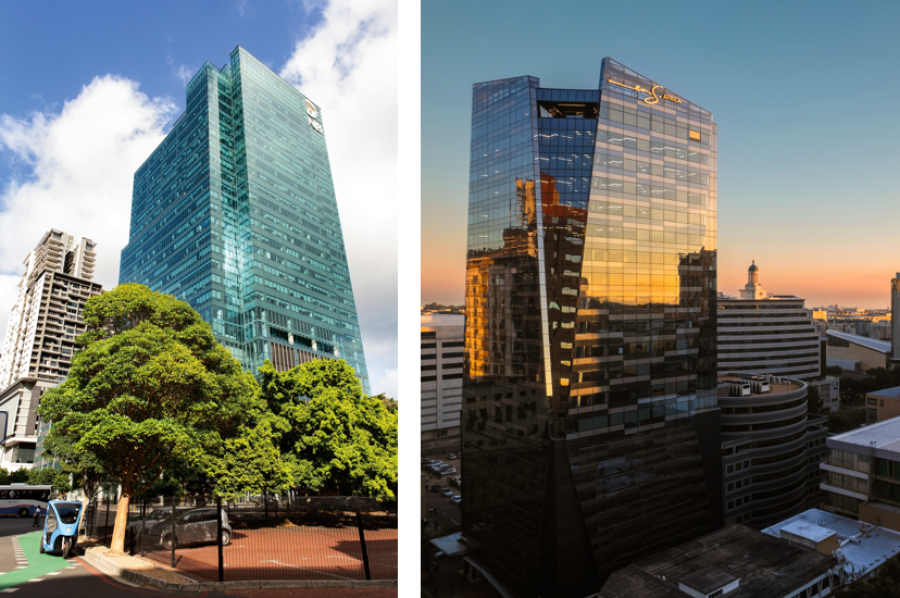
A major recent milestone is the Net Zero Carbon Level 2 certification of one of the city centre’s iconic landmarks, Convention Tower, located at the corner of Heerengracht and Walter Sisulu Avenue on the Foreshore. Owned by Redefine Properties, the building is among a growing number of existing CBD assets proving that deep operational decarbonisation is achievable within established commercial environments.
Awarded by the Green Building Council South Africa (GBCSA), the Level 2 certification is based on 12 months of measured operational performance and includes both landlord and tenant energy use.
According to Samantha Lambert, Redefine Properties general manager: coastal and board member of the Cape Town Central Improvement District (CCID), it is one of the most rigorous sustainability standards in the local market, and exemplifies the company’s sustainability philosophy.
“As cities grow and change, existing buildings must adapt. We view sustainability as a practical way to keep city centres efficient, resilient and attractive for business,” she says.
Ursula Mpakanyane, head of Environmental, Social and Governance (ESG) at Redefine Properties, believes the certification reflects a practical approach to keeping the city centre competitive. “Convention Tower demonstrates how office buildings in the Cape Town CBD can evolve while meaningfully reducing their carbon impact.”
Convention Tower has maintained a 4 Star Green Star rating since 2016, supported by consistent investment in energy efficiency, robust building management systems and close collaboration with tenants. Interventions included optimised HVAC systems, LED lighting upgrades and operational adjustments aimed at lowering baseline energy consumption.
INNER CITY GREEN BUILDING LEGACY
While Convention Tower represents the latest phase of decarbonisation, the Cape Town CBD has been laying the foundation for sustainable commercial development for over a decade.
A defining early landmark was Portside Tower, designed by dhk Architects and completed in 2014. Awarded a 5 Star Green Star Office Design rating by the GBCSA, Portside Tower was the tallest green building in South Africa at the time and remains a prominent symbol of the city’s commitment to sustainable, high-performance office development.
Architectural practices such as dhk have continued to shape this trajectory in the inner city through future-forward developments including 35 Lower Long and The Rubik. These buildings integrate a range of green building initiatives, from energy efficient lighting and air conditioning systems designed to reduce electrical consumption and refrigerant emissions, to maximised daylight access, low-energy water heating solutions and on-site bicycle storage. Environmental and waste management plans were embedded during construction, supported by building user guides to encourage responsible occupation. These buildings also feature active street frontages which enhance the social sustainability of the city, and residential development close to public transport and local amenities promotes walkability to reduce carbon emissions where possible.
The Cape Town International Convention Centre (CTICC) has also been widely recognised as a benchmark for sustainability, incorporating energy efficiency measures, water-saving interventions and responsible waste management practices as part of its ongoing expansion and operations.
Together, these projects have helped to establish the CBD as a credible destination for sustainability-led investment well before green buildings became a market expectation.

TENANT EXPECTATIONS GO GREEN
Alongside new developments, refurbishment has emerged as a critical driver of sustainability in the CBD. Ninety One, an established Foreshore tenant for over two decades, recently opened its newly renovated Growthpoint-owned 36 Hans Strijdom Avenue building.
The upgraded building, completed in 2025 at a cost of R600 million, aligns with Ninety One’s net-zero carbon aspirations and incorporates an on-site solar plant, energy efficient displacement air conditioning and high-performance glazing. The formal reopening of the building was attended by the President, underscoring both the significance of the investment and the growing prominence of sustainable commercial assets within the national context. The building was also the first in Cape Town to receive clean, green energy wheeled through the city’s grid.
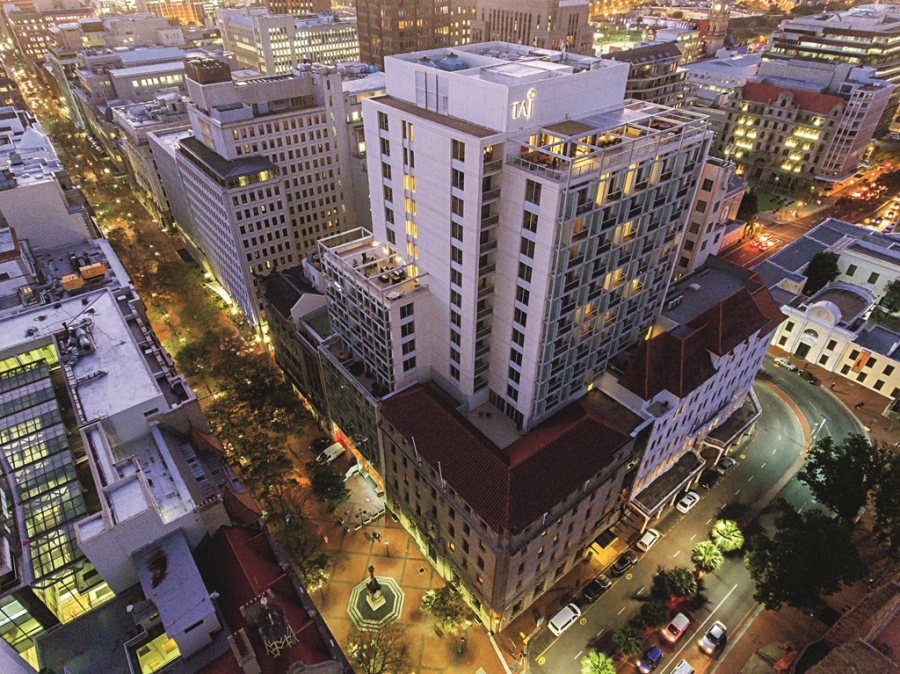
Implementing passive design principles and reusing existing assets, which is a technique that retains embodied carbon in buildings, are additional approaches that help to minimise the environmental impact of construction projects. Examples in the CBD of this adaptive reuse approach can be seen in dhk's designs for the redevelopment of the former Christiaan Barnard Hospital at City Park on Bree and Loop Streets. Other examples include the 2010 development of the Taj Hotel from an existing heritage building and the 15 on Orange Hotel, which was completed in 2009.
Boxwood Property Fund continues to contribute to the CBD’s evolution through “greening” its commercial offerings. Chief Operating Officer Sarah Divaris explains that tenant expectations have changed significantly. “Tenants are no longer just looking for square footage. They want environments that prioritise sustainability, wellness and a sense of community. We have introduced balconies, atriums, bicycle storage and shower facilities, and are reactivating rooftops and underused spaces to introduce greenery. Seventy percent of our portfolio now carries 4 or 5 Star Green Star ratings.”
Divaris adds that office spaces are being reconfigured to support culture and collaboration as much as day-to-day work. “The office is no longer just a place to work. It is a space for connection, innovation and culture. We aim to create environments that people actively want to be in.”
COMPETITIVE EDGE
The GBCSA has played a central role in guiding these shifts through its certification frameworks, research and advocacy. Green Star and Net Zero certifications have become important tools for improving building performance, managing risk and aligning real estate assets with climate resilience goals, to meet the needs of the present while safeguarding the future.
GBCSA, head of technical, Dash Coville says, “We have seen a growing increase in interest in sustainability from the commercial sector in the Cape Town CBD and there are several new certification projects underway. Many of the 1 500 green building certifications in South Africa come from Cape Town. Green certified buildings demonstrate significant competitive advantages for business owners, especially in competitive, rapidly developing areas like the Cape Town CBD where tenants and investors are seeking verified efficiency and sustainability.”
Green buildings also support the broader economic and operational health of the CBD.
CCID CEO Tasso Evangelinos says improved building performance aligns directly with the organisation’s mandate. “Buildings with improved energy and water efficiency place less pressure on city infrastructure, generate less waste and often provide better working environments. These advantages support footfall into the city centre, sustain employment density and build investor confidence. From the CCID’s perspective, green buildings contribute directly to a stable and well-managed urban ecosystem. We are very proud of our stakeholders who have implemented sustainability projects and renovations.”
As Cape Town continues to balance economic growth with environmental responsibility, the CBD’s growing concentration of high-performance buildings demonstrates how sustainability and commercial performance can reinforce one another. From early Green Star pioneers to advanced net-zero refurbishments, the precinct is increasingly positioned as a resilient, future-ready destination for business and investment.
IMAGES: Redefine, Carmen Lorraine
Other stories you might like:
Cape Town CBD trends shaping the property sector
Investor confidence in Cape Town soars