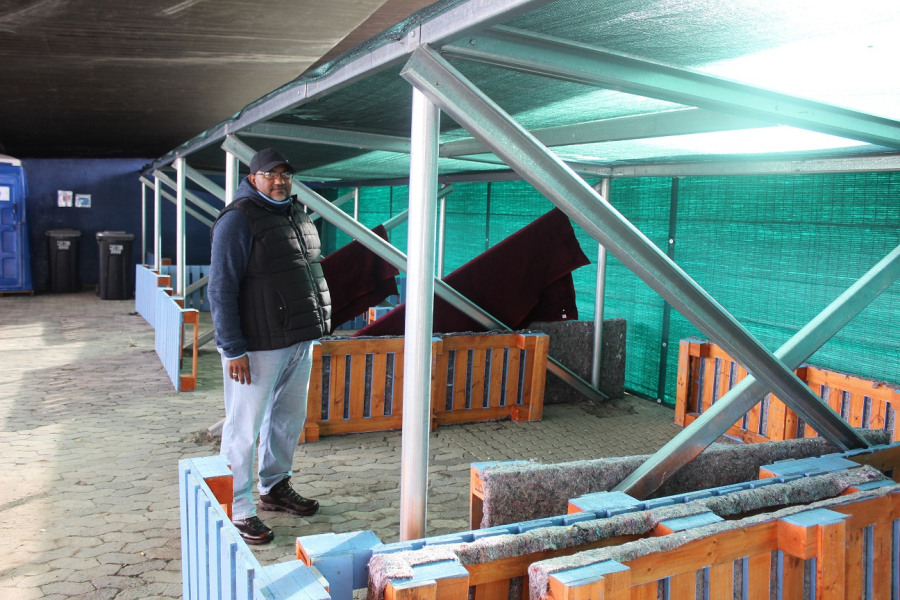
In an effort to address the shortage of beds at shelters in the Central City area‚ as well as the safety of those sleeping on the streets, the City of Cape Town has officially opened an overnight Safe Space facility under the Culemborg bridge in the Foreshore area.
An initiative of the City of Cape Town’s Social Development and Early Childhood Development Department, the Safe Space project, officially opened on 17 July and will be able to accommodate up to 230 people. It initially opened to a small group of streetpeople on 29 June in order to test its access and placement systems. This pilot group of 11 streetpeople also included two people with disabilities, in order to assess how well the facility could function for all inhabitants.
With the space to be accessed free of charge, individuals will also be able to use ablution facilities, water and storage for their belongings. In addition, the facility will also offer access to a range of social and medical services, with assessments and referrals done on site. Short-term work opportunities will also be made available through the City’s Expanded Public Works Programme (EPWP), among others.
According to a statement by Alderman JP Smith, the City’s Mayoral Committee Member for Safety and Security and Social Services: “There are 15 street people who have been accommodated thus far and all have returned nightly since we opened. They have provided valuable feedback and we now have a list of street people who have expressed interest in being accommodated at the site once it is fully operational. And already many of those who have made use of the facility have indicated that they feel safe and are glad to be off the streets and receiving social assistance.
“On the one hand, we want to take pressure off existing shelters and reduce the number of by-law infringements that come with people sleeping or erecting structures in the open, but we also want to develop relationships with our clients over a period of time that will hopefully lead to reintegration for some. Individuals seeking to use the facility will be assigned a storage locker, a sleeping pallet, sleeping bag and blanket as well as a wellness pack containing hygiene essentials. The City is also partnering with external service providers to bring their specialist services, soup kitchens and other catering services to the site to provide meals.”
The City’s opening of the Safe Space coincides with the Cape Town Central City Improvement District’s (CCID) annual “Show you care” winter drive aimed at raising public awareness about the plight of streetpeople during the colder months. Scheduled to run until the end of September 2018, the “Show you care” winter drive, headed by the CCID’s Social Development department is also aimed at raising awareness about the work carried out by this department which engages with the Central City’s most vulnerable individuals and forms partnerships that will alleviate the CBD’s own challenges.
Says Pat Eddy, the Cape Town Central City Improvement District’s (CCID) Social Development manager: “This is a project that we have been waiting a very long time for. It enables our team of CCID fieldworkers to offer their clients an alternative to sleeping on the streets of the Central City. It is our greatest hope that this project will work towards restoring the dignity of streetpeople by offering them the basic services that so many of the rest of us take for granted, such as access to toilets, showers, lockers, a safe place to sleep at night, among so many other things.
“It will also hopefully develop into a welcoming space for people living on the streets where they will also be able to help determine the rules for themselves and what support services will best assist them. We also hope that it will be an initial opportunity towards a pathway to recovery and development as well as an initial example of transitional housing for people living on the streets, and can form the basis for other suitable models.”
CCID field worker Mark Williams has been actively involved with the Safe Space project since the pilot began; making regular trips to the space even on weekends.
When asked about the significance of the project, Mark responses encouragingly: “I can’t tell you how amazing it is to finally have a space to take our clients to in the Central City to, especially now that it’s cold and raining. And what has been most heartening for me is how our clients have responded and welcomed the Safe Space; there’s a sense of ownership and great appreciation.
“This is quite remarkable when you consider that the first group of streetpeople taken into the shelter were all of our own clients who have slept for years on Thibault Square. Among them are chronic homeless who are often unable to stay at traditional shelters due to heavy drinking or drug use. However, their attitude towards the project has been amazing – they’re taking responsibility, arriving there on time and I’ve even observed some of them offering assistance at the Safe Space. I believe this once again reinforces our social team’s stance that streetpeople are very definitely interested in services aimed at improving their situations. So often there is the misconception that they are not open to receiving assistance; but the right kind of assistance is always embraced with open arms.”
According to CCID CEO, Tasso Evangelinos: “The CCID has been anticipating the opening of the Safe Space for some time, and we look forward not only to it being fully operational but to our working hand-in-hand with the City to make sure it is a success.
“To start, we will be donating 300 Street Sleeper [sleeping] bags and 600 care bags containing toiletries and other essential items to the space, and commit ourselves to providing any other assistance that the City may require on this all-important project. We would also like to echo the call by the City encouraging NGOs and concerned citizens to render their support towards the Safe Space. Pulling together is the only way we will ever be able to find sustainable solutions and deal with challenges that our streetpeople community faces.”
To effectively manage the Safe Space, a service provider has been appointed to clean the site three times a week, while daily cleaning tasks are performed by streetpeople appointed via the EPWP. In addition, the City’s Health Department will conduct regular visits to ensure vector control and do referrals for medical services. The site will also have a dedicated Law Enforcement team to provide security.
Alderman further notes: “There is no blueprint or best practice model for the provision of safe spaces for streetpeople.
“We are literally learning as we go along, but I do believe it is better to try and adjust as we go along than not to attempt this at all. This pilot will inform the best way forward for the allocation and management of safe spaces for streetpeople within the city, with the aim of assisting streetpeople to remain off the street and to be reintegrated back into society.”
Images by CCID Online Coordinator, Scott Arendse (pictured: CCID Social Development Fieldworker, Mark Williams)