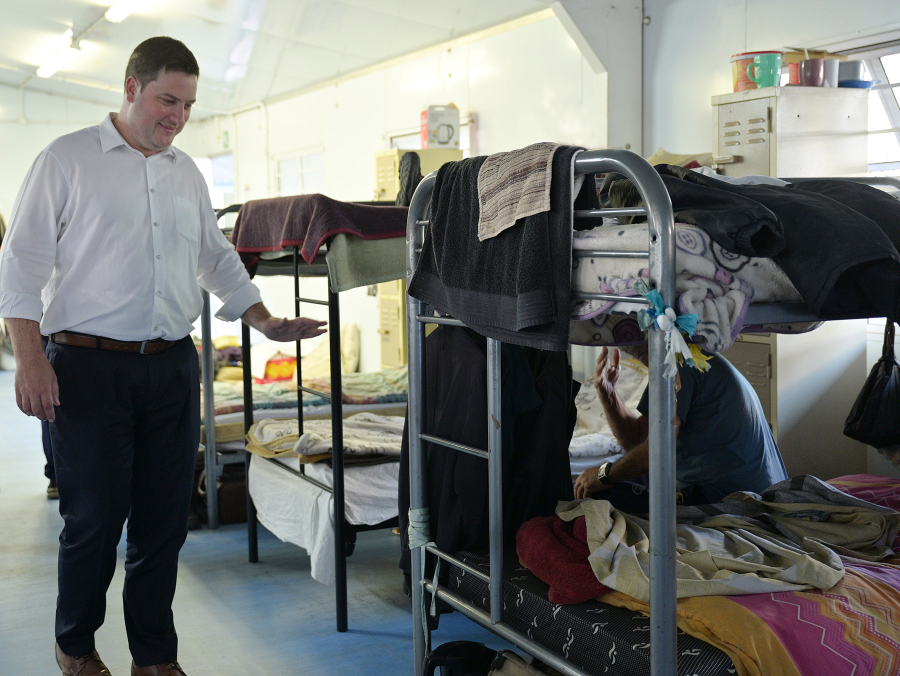
Cape Town Mayor Geordin Hill-Lewis has announced plans to dramatically raise budgets to expand dignified transitional shelter for the homeless in Cape Town. The City is proposing a budget of R230m over the next three years to operate and expand Safe Space transitional shelter. This is a 62% increase over the previous three-year budget cycle to help more people off the streets.
Mayor Hill-Lewis paid a visit to the City’s Safe Space at Culemborg in the CBD on Wednesday, 1 March, which offer 480 shelter beds to help people off the streets across two facilities in the east of the CBD.
‘We are demonstrating our commitment to help more people off the streets by raising our Safe Space budgets by 62% over the next three years. Around R230m is projected to expand and operate these facilities within the CBD, Bellville, and various other economic nodes in the city. This budget is over and above the ongoing support the City provides to NGOs assisting the homeless, including grant-in-aid funding.
‘Cape Town is the only metro in South Africa dedicating a social development budget for care interventions on this crucial issue. No person should live on the streets, it is unsafe, unhealthy, and undignified. Equally, no person has the right to exclusively reserve a public space while indefinitely refusing all offers of social assistance,’ said Mayor Hill-Lewis.
City Safe Spaces offer dignified transitional shelter to help people off the streets, coupled with programmes to promote reintegration into society, or reunification with family. Addiction treatment, referrals for psychiatric treatment, personal development planning and employment opportunities are also on offer
An over 300-bed Safe Space is on the cards for Green Point, to help people off the streets in the CBD and seaboard area. A budget of R8,25 million is proposed to develop the facility, and R10 million to operate it for the financial year.
The planning application for the Green Point Safe Space is set for public participation in March/April. Comment by affected parties will be called for and duly considered.
In total, there will be a 420-bed boost for Cape Town’s inner city, with around 120 shelter beds already added to the City’s Culemborg Safe Space during winter 2022. In Bellville, the City’s Safe Space at Paint City has capacity for 250 people.
Yet more new beds will follow as the City works to help expand NGO-run shelters operating on municipal-owned land in central Cape Town, as well as the annual seasonal bed boost as part of the City’s Winter Readiness Campaign 2023.
The City will increase Safe Space capacity in Bellville, Muizenberg and Durbanville in coming months. The City is also making progress on re-purposing other municipal-owned sites elsewhere in the metro, working together with NGO partners, CIDs and residents.
Since the start of the 22/23 financial year in July 2022, City social development interventions have resulted in:
• 1453 people helped off the streets
• 942 people participating in development programmes at Safe Spaces
• 409 EPWP work placements for those staying at Safe Spaces and shelters
• 382 referrals for social grants, IDs, specialised care and mental health facilities, and substance abuse treatment
The City’s Safe Space model includes:
· dignified shelter,
· comfort and ablutions,
· two meals per day,
· access to a social worker on-site,
· personal development planning,
· various social services including ID Book and social grant assistance,
· family reunification services
· access to substance and alcohol abuse treatment,
· skills training,
· help finding a job, and
· access to EPWP work placement
Public places must be open and available to all
The Western Cape High Court has granted the City of Cape Town’s application for eviction notices to be served at various unlawful occupations in the CBD. At the next court hearing in April, the court may grant a final eviction order.
Eviction notices have been served at unlawful occupation hotspots along Buitengracht Street, FW De Klerk Boulevard, Foregate Square, Taxi Rank and Foreshore, Helen Suzman Boulevard, Strand Street, Foreshore/N1, Virginia Avenue and Mill Street Bridge in the city.
Over time, City Social Development officials have made repeated offers of social assistance to those unlawfully occupying public spaces in the city, including offers of dignified transitional shelter at NGO-run night shelters and City-run Safe Spaces.
This is part of a city-wide approach of assessing the social circumstances of those living on the streets, while offering help and dignified transitional shelter.
While some have accepted these offers of support, the unlawful occupants who received notices are those who have consistently refused all offers of social assistance while continuing to unlawfully occupy busy intersections and road reserves in the CBD.
No person has the right to reserve a public space as exclusively theirs, while indefinitely refusing all offers of shelter and social assistance.
Our city’s public places serve important social and community purposes, and must be open and available for all. Illegal occupations of City open spaces impact the safety of traffic and pedestrians, as well as local businesses critical to growing the economy.
Accepting social assistance to get off the streets is the best choice for dignity, health, and well-being.
The City approaches the court only in the last instance, in cases where all offers of support are indefinitely refused.
Caption: Mayor Geordin Hill-Lewis visits a City-run Safe Space on 1 March 2023. The facility provides dignified transitional shelter to help people off the streets.
End
Issued by: Media Office, City of Cape Town
Media enquiries: Lyndon Khan, Mayoral Media Officer, Cell: 076 186 8719, Email: Lyndon.khan@capetown.gov.za (please always copy media.account@capetown.gov.za)