
“One man, one grave” is the concept behind a large-scale, significant new war memorial to be erected in the Company's Garden to honour black South African soldiers who fought in WW1.
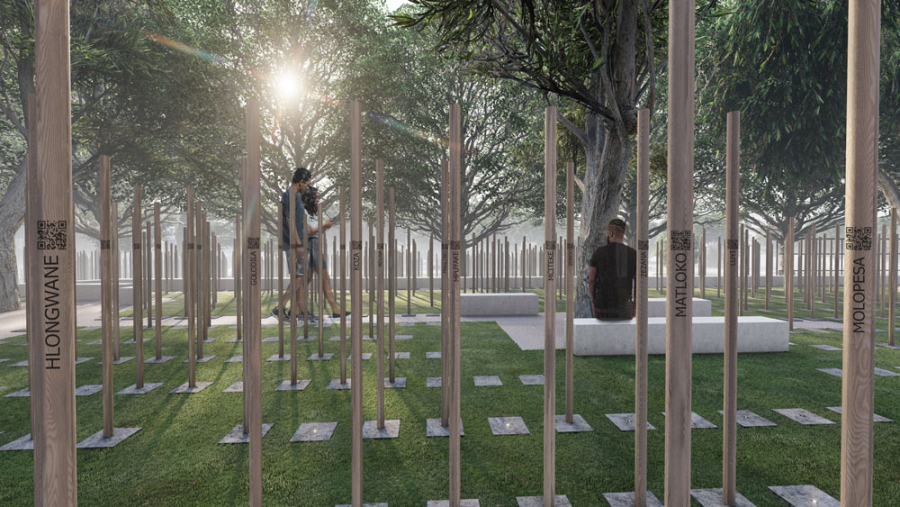
Dramatic in scale and vision, a new war memorial incorporating more than 1 600 individual wooden markers to honour fallen black soldiers who died for their country during WW1 will be erected in the Company’s Garden in Cape Town.
The poignant Commonwealth War Graves Commission (CWGC) memorial is set to redress historical mistakes and become a striking focal point in the iconic green lung of the Central City.
The memorial will salute the South African Labour Units, who carried equipment, food, supplies and materials required by active troops. Also known as the Carrier Corps, they sacrificed their lives on the African continent but were never honoured in a fitting way.
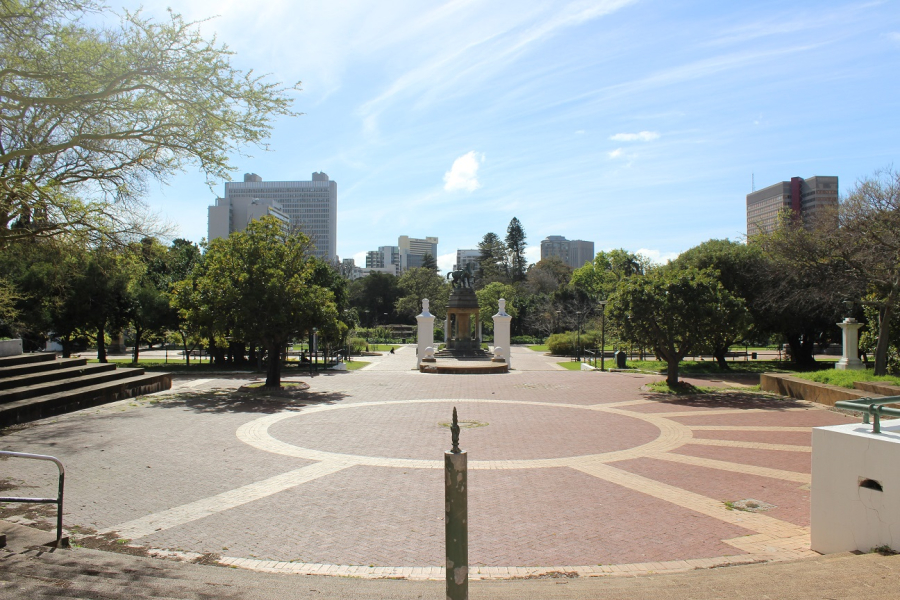
This is all set to change. The poignant memorial will be installed on the lawns near the Iziko South African Museum on the quadrant next to Queen Victoria Street, and will stretch south of the formal pathway, looking north towards the fishpond and the Delville Wood Memorial.
A departure from usual memorials, the sensitivity and imagination behind its design led to Durban architecture firm Dean Jay Architects being selected as the unanimous winners in September of the competition for the proposed Cape Town memorial, beating more than 50 applicants across South Africa.
ONE MARKER, ONE SOLDIER
Dean Jay, founder of Dean Jay Architects, says the design is unique in that it has an individual marker for each fallen soldier. He says, “A lot of memorials have a wall with victims’ names. In Europe, there are cemeteries for white victims, and each one has a marker, most of which are graves, and the remains are buried there. But many are markers without remains. We felt in commemorating black victims … they deserved to have an individual marker, and that was the key point of departure for the scheme. I think we were the only ones that had an individual marker for each victim.”
With the individual markers, the idea is also that families seeking closure should not be subjected to alphabetical or other listings on a wall as “each death has an individual significance understood only by their personal experience”.
Jay admits that this isn’t a regular project and carrying it out successfully will require consideration and being true to its purpose.
“It’s a big honour to win as an architectural practice and due to the gravity of the project and its location in such a public place in the Company's Garden, which was designed by Sir Herbert Baker, an old colonial architect. We are also cognizant of the intent of the competition to redress imbalances of the past where there was no honouring of black soldiers,” says Jay.
“Apart from people wanting to find out more about their deceased ancestors, we hope it’ll add another dimension to the Garden, without distracting from the design of the park.”
DIGNIFIED MEMORIAL
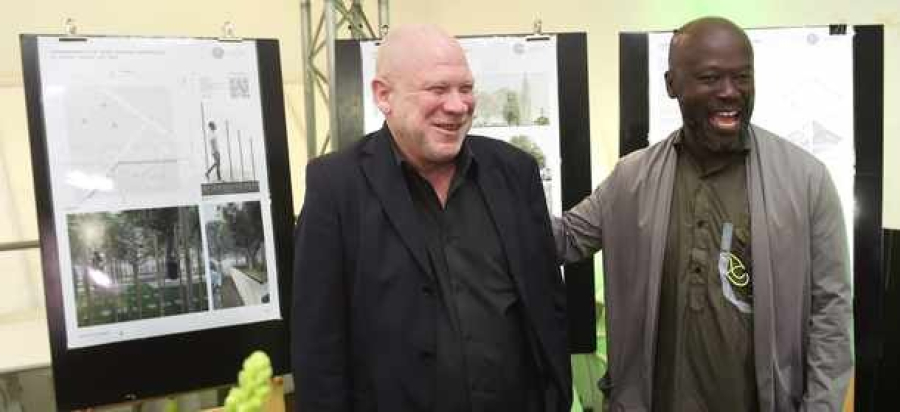
Laura Robinson, Cape Town architect, Heritage specialist and former CCID board member, was one of the jurors on a panel that also included internationally renowned architect Sir David Adjaye OBE.
The panel was looking for a memorial that was “dignified and appropriate to the setting of the Company’s Garden; one that would offer a calm contemplative space for visitors to reflect on the memory of those who had served and died in the service of their country, and where the names of all of those men could be found inscribed in an accessible way in the memorial space”, Robinson explains.
“The design needed to sit within the green space and relate to the existing war memorials. It was important that it did not use what could be termed ‘hackneyed’ responses to the brief but be truly innovative and outstanding when experienced by visitors.”
DIGNITY OF THE DESIGN
Amy Reeves of the Commonwealth War Graves Commission concurs, believes Dean Jay’s design “manages to assert itself in the space with subtle dignity”, with the natural wooden posts using light, reflections and shadow to evoke powerful memories of burial and commemoration.
Telling the stories of the men is also important and the posts will be “interactive” and a QR code on each post “will allow us to draw people to the memorial with personal stories that can be added to over time”.
The site features posts for the known casualties and light for the unknown. The idea is that as more research uncovers additional casualties, the light in the marker will be extinguished and replaced with their post. The designers used the wooden posts as a metaphor of or for a forest destroyed by the inferno of war or “a skeleton or remnant of humanity stripped of life for us to contemplate the unbearable tragedy of war”.
The way the posts are installed as a “pilgrimage” to the location is intended to force movement throughout the site between the markers of the other fallen, increasing the experiential engagement with the memorial.
The project, which will take three to four months of work on-site, is being managed in Cape Town by CWGC’s operational manager David McDonald. Jay, the project architect who designed the concept with Matthew Morris, Valentino Moutzouris and Nicoll Rorich, is also part of the team.
While construction will begin in mid-2023 and end in 2023, work has already started off-site and most of the construction will be prefabricated off-site. Timeframes will also depend on approvals from the City of Cape Town and Heritage Western Cape.
COMMEMORATING ETHNIC GROUPS
This unique monument forms part of remedial action after a Special Committee probe commissioned by the CWGC on the early history of the Imperial War Graves Commission.
It found that, in some instances, the organisation erred in commemorating certain ethnic groups outside of Europe and provided guidelines for remedying the inequalities identified such as casualties commemorated unequally, not commemorated by name or possibly not commemorated at all.
Robinson says the project will address and rebalance the errors of the past ensuring that the men who served are given the commemoration that they deserve. “It’s conservatively estimated that well over 100 000 men were deployed in East Africa alone,” says Robinson. With the memorial bearing the names of more than 1 600 South Africans, the CWGC hopes it will also become part of the rich artistic heritage of the War Graves Commission and South Africa.
Robinson says the monument will become a destination in and of itself and will be an outstanding addition not only to the Company’s Garden but also to the cultural landscape of the city.
“It reminds me of how fortunate we are to be in Cape Town and the amazing opportunities our city offers to engage in projects such as this. We are sure that this memorial is going to serve as a destination for locals and visitors alike and will benchmark how memorialisation can be done to an international standard,” notes Robinson.
IMAGES: Commonwealth War Graves Commission, CCID, Phando Jikelo/African News Agency