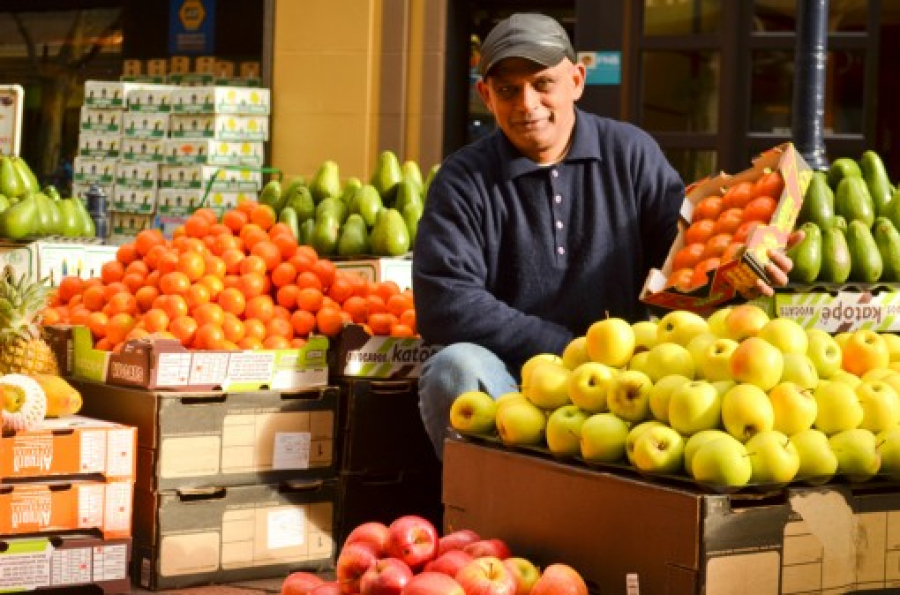
Prompted by Robert Neuwirth's write-up in Foreign Policy – which details the rapid growth in informal trade worldwide – we spoke to two street sellers in Cape Town to find out what business is like.
Hamied Bhawoodien: Gogo fruit
Hamied Bhawoodien has been trading on the streets of the CBD for over 30 years. He started his own business selling fresh produce on St George’s Mall eight years ago and, come rain or shine, his stall continues to provide many passers-by with a daily dose of fruit, vegetables and animated conversation.
CV: What is your background and why did you decide to start trading in the Central City?
I dropped out of school when I was a teenager because I realised that I’d rather work and sell things than study. I started working for someone else, selling fruit and vegetables in town. I’ve always sold produce, except for times when I’ve taken other part-time jobs – like building or bricklaying.
CV: How has informal trading in the CBD changed since you started out?
It’s a lot more organised now. You apply for a monthly traders’ permit and you’re allocated a specific place to trade from. In the past there were a lot more informal traders than there are today and there was a lot more competition. You couldn’t get a permit though and it was illegal to sell things on the street. If the police caught you they’d confiscate your stock and you’d go to jail.
CV: What’s does a typical workday look like?
I live in Gatesville in Athlone and every morning I try to get to the Epping market early, around 04h00 or 05h00, before the big retailers come to buy their stock. My son Faizel helps me load up our bakkie with produce and then we come through to town. We set up early in time for commuters and office workers to shop on their way to work. It’s mainly regulars who buy from me. If I’m not here my customers phone me to see where I am and they wait for me to come. My customers are loyal because I guarantee the quality of my stock. If it’s not good, I’ll refund you. It’s hard work so I employ someone to help me sell. If we haven’t sold all the stock by the end of the day, I make up sale packages – like R10 for a mixed bag – because I don’t like to have leftovers.
CV: What’s the best thing about working in the city centre?
I love working outdoors and Cape Town is the best place. It’s a safe place. It’s all happening in Cape Town and the people are friendly. I learn something new every day. I’ve learnt how to say hello in languages like German and Italian from chatting to my customers.
CV: If you weren’t a trader what sort of work would you do?
If I didn’t do this sort of work I’d be in tourism. Most people in the tourism industry have to look up places in Cape Town on a map, but I know this city so well I’ll never need to use a map.
Visit Gogo Fruit for yourselfMondays to Fridays from around 07h00 to 17h00
St George's Mall (outside the entrance to Clicks), 074 672 3678
Ruth Moore: Artmosphere

Ruth Moore was one of the first informal traders on St George’s Mall. Twenty-three years ago she set up a street gallery to showcase work by African artists and today her stall continues to add a splash of colour to the heart of the Central City.
CV: What’s your background and what inspired you to start trading art?
I grew up in Germany and moved to Africa around 35 years ago to work as a missionary. I met my husband in Zimbabwe and we moved to Cape Town a few years later. He’s always been involved in music and art, and had a few close artist friends. Some of these artists were from places like the Congo and Zimbabwe, and they came from disadvantaged backgrounds. I wanted to help create exposure for their work by providing a platform for it.
CV: What attracted you to the idea of trading informally in the CBD?
I love being outdoors and being a part of the vibe of an African city. I don’t think I could ever work indoors. Trading on the street is a lot cheaper than opening a traditional gallery and I enjoy being my own boss. I pay a relatively small fee for a monthly traders’ permit but I don’t have to make a huge turnover to afford to pay rent. I don’t have to come to work everyday but I want to; you have to be determined and persistent, and you have to be here to sell.
CV: How has this part of the city transformed over the years?
The city feels safer and it’s a lot cleaner. It’s probably one of the cleanest cities in the world now. There are a lot of visitors from places like the United Kingdom and Germany, but I’d like to see more people visiting Cape Town from abroad. There seems to have been a lot of turnover of tenants in the shops around St George’s Mall but there are a lot more informal traders selling art here. There’s a lot more competition, but it’s a great place to trade in terms of logistics.
CV: What sets your stall apart from others in the area?
This was the first street gallery in the area and I have a lot of loyal customers who come here because they trust that I’ll always have a good selection. I curate a variety of artworks by different artists so there’s always something for everyone. Some of the artists are formally trained professionals and some of them live in the townships and have never received formal training. I prefer not to accept commissions on their behalf because they’re sometimes unreliable due to their circumstances, but I do arrange special commissions sometimes.
Visit ArtmosphereMondays to Saturdays from around 10h00 to 16h00
St George's Mall (outside the entrance to Edgars), 083 448 5477.