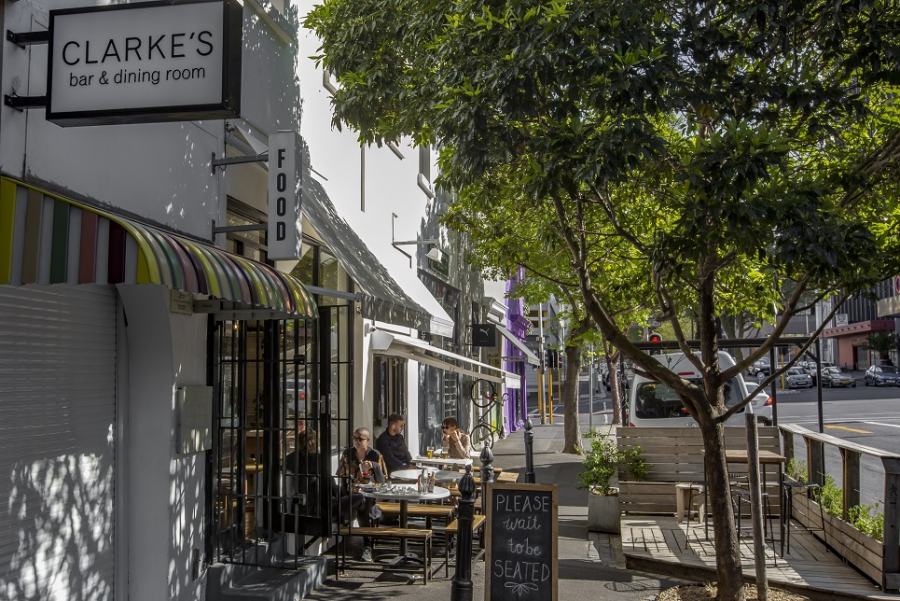
Business confidence in Cape Town’s CBD rebounded in the final months of 2021, with more than half of the retailers surveyed by the Cape Town Central City Improvement District (CCID) indicating that they were “satisfied” with current business conditions.
This was the first time that retail confidence, as measured by the CCID Retail Confidence Index, moved into positive territory since the start of the pandemic.
The CCID survey, which includes at least 200 retailers doing business in the CCID’s 1.6 km² geographical area, and in all major retail categories, was first conducted in July 2020 – as soon as Covid-19 regulations allowed CCID fieldworkers to engage with local businesses.
In the first survey, confidence among inner-city retailers was a mere 23 %, with nearly 52 % of the retailers surveyed indicating that there was a “medium” or “high” risk that their businesses would close before the end of 2020 as a direct result of the lockdown restrictions.
In the latest survey – conducted in early December – a similar percentage (51.2 %) of retailers indicated that there was “no risk” of their businesses going under before the end of 2022.
Says Tasso Evangelinos, CEO of the CCID: “While this latest survey was conducted just before news of the Omicron variant disrupted business once again, the lifting of the night-time curfew ushered in the start of the revival of the night-time economy, bringing restaurant, bar and club patrons back into town.
“While the office market continues to adjust to the new work environment, the slow but steady return of office workers to the Central City bodes well for the continued recovery of the retail sector in the CBD during the course of 2022.”
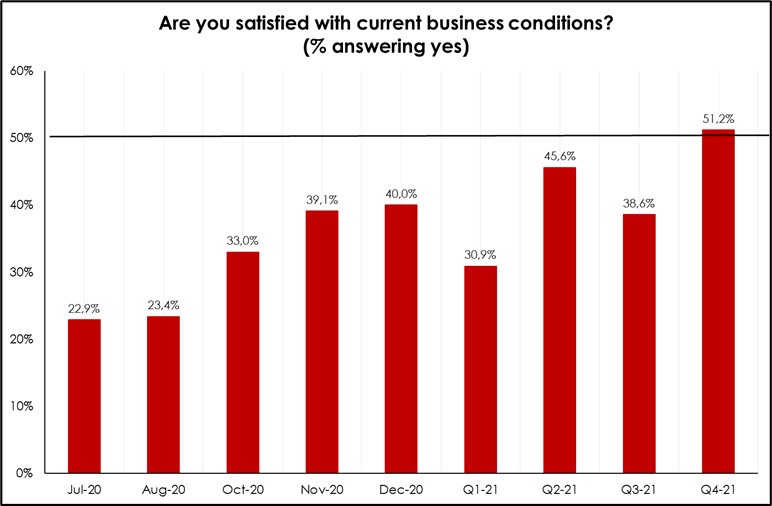
A graph depicting the business confidence of Cape Town CBD retailers from mid-2020 to the end of 2021.
RISK OF CLOSURE
The perceived high risk of closure during the first year of the pandemic led to an estimated 111 retail businesses closing their doors in downtown Cape Town by the end of 2020.
At the same time, the vacancy rate across all precincts rose to 11.5 % (31 077 m²) of the total retail space available in the Central City, up from 9.4 % at the end of 2019.
However, as we ease into 2022, Central City retailers have adjusted to the “new normal”: not only has retail confidence improved, but new businesses continue to open.
The majority of these are cell phone stores and coffee shops but a notable number of new pop-up art galleries, bars, clubs and restaurants have joined the mix.
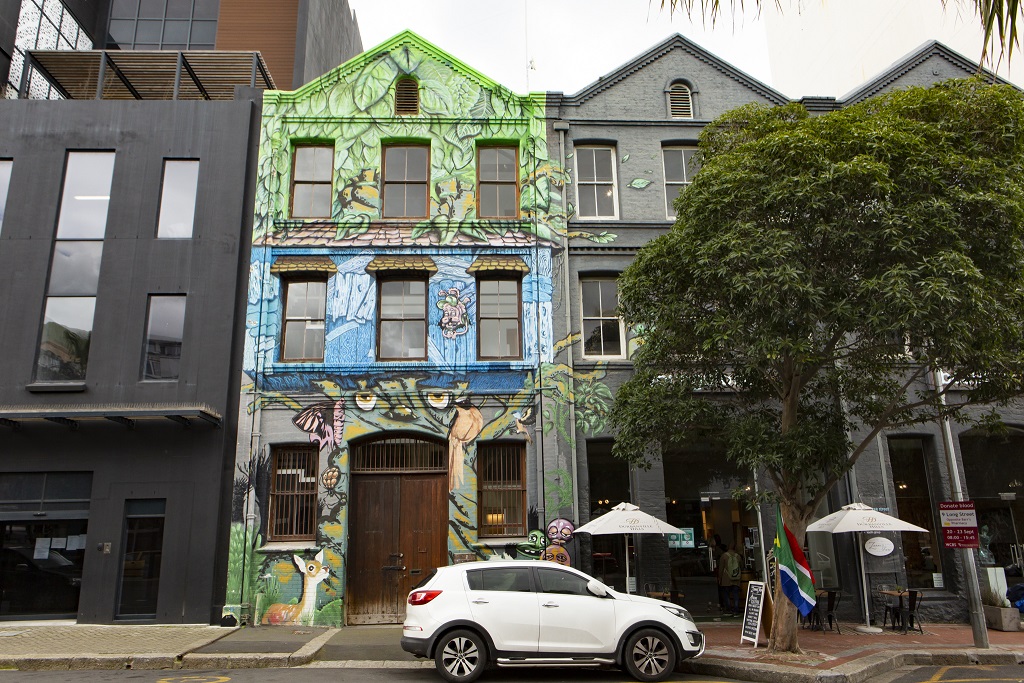
Pop-up art galleries are among the new wave of businesses to open during the pandemic.
REDUCING OVERHEADS
In the past two years, the quarterly confidence surveys have revealed that retailers have focussed on reducing overheads, trading hours and staff numbers to remain open as they grappled with lower levels of economic activity – particularly during the more restrictive periods of lockdown.
There has also been a predictable shift towards online shopping, accelerating the well-established trend towards e-commerce.
However, encouragingly for retailers, a CCID annual residential survey among local inner-city residents conducted last year revealed that, despite the pandemic, nearly half of all surveyed locals still preferred to go to visit a physical store rather than to order their purchases online – highlighting the ongoing demand for brick-and-mortar stores.
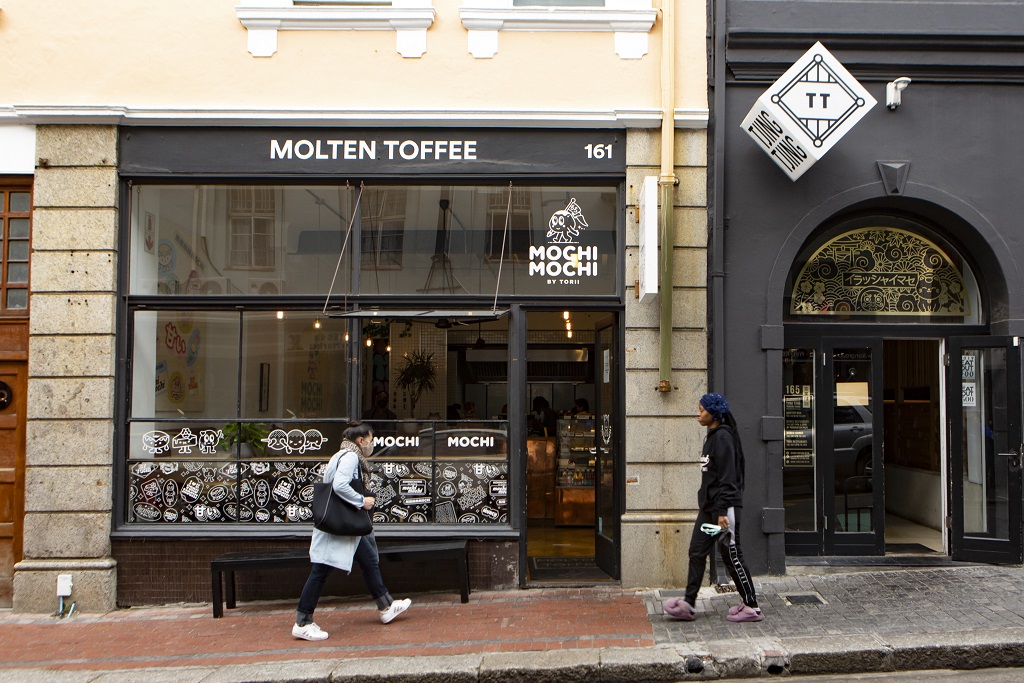
The retail sector took a hard knock in 2020 and 2021 but things are looking up in 2022.
FACING THE FUTURE
Faced with unprecedented levels of uncertainty and subdued activity, retailers are adapting their businesses to reduce their expenses as far as possible while ensuring maximum flexibility.
One of the ways in which businesses are achieving this is the establishment of venues which incorporate numerous retailers within a single venue. Examples include Local at Heritage, The Long Market, and the recently launched Salt Market in The Box (previously Atterbury House in lower Burg St).
Another example of how businesses are adapting to the new environment is the use of a single venue during different times of the day. For example, last year, Café Frank, which offers breakfast and lunch, allowed pop-restaurant Farro to operate at night, offering a popular dinner service on its premises – thereby reducing overhead costs for both businesses.
IMAGES: Carmen Lorraine, CCID