
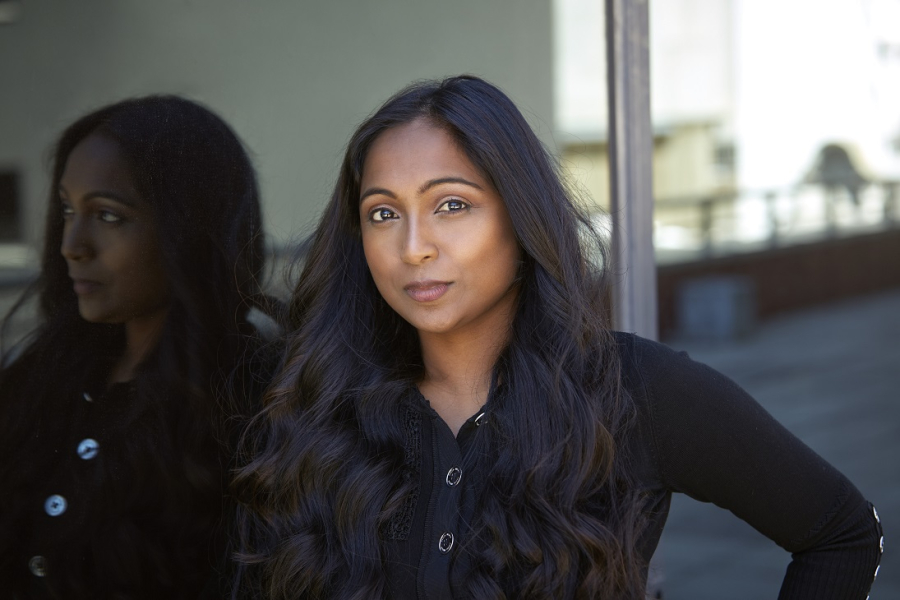
She transformed the fortunes of PayU South Africa in just over a year. Now Cape Town-based CEO Karen Nadasen Kew is blazing a trail for other women in tech.
Sitting in her Pier Place office with its view of Table Mountain, Karen Nadasen Kew, the commanding CEO who turned around PayU South Africa in little more than a year, knows she’s exactly where she’s meant to be.
In Cape Town, acknowledged as Africa’s leading tech hub where more people are employed in the sector than anywhere else on the continent, she says she can do her best work as a seasoned champion for women in the traditionally male-dominated sector.
It’s this undertaking, along with the valuable diversity programme which she has already implemented at PayU South Africa, that Karen shared when she took the stage at the recent Women in Tech Africa Summit, which took place in Cape Town recently.
CHANGING THE STATUS QUO
Unconscious bias is top of her agenda, and she speaks passionately not only about her personal, and often difficult journey to the top, but also her commitment to change the status quo in the burgeoning fintech arena.
“South Africa is far behind in achieving gender parity in the technology field. Where ‘hard tech’ skills are required, women account for less than 20 % of employees. Women are still seen to be effective in ‘soft tech’, like marketing, or sales even, in technology companies – leaving core decision-making and product development to men,” Karen points out, a reality she attributes to education bias.
There are other African countries, she says, that are doing much better.
“Diversity is not working here, and it’s up to us to help drive new interventions that take into account different strategies to empower women in tech, and also to acknowledge the value of such a push.
“There is plenty of research to show that educating women improves entire economies. There is a business case for it, and since what is already being done isn’t working, we need to effect a mindshift by partnering with people who are passionate in this space,” Karen urges.
WALKING THE TALK
At PayU South Africa, Karen – who has routinely been hailed as one of the country’s most inspiring women in tech – has walked the talk. Four years after becoming head of what was then an ailing company, she has been nominated for IT Personality of the Year 2017 and was listed among the 100 Most Influential Young South Africans the same year.
More importantly, by late 2018 she had grown PayU’s total e-commerce processing volume by 225 %, boosted revenue by 136 %, and engineered a management team for the company that comprised 75 % women – all this after taking the reins when her youngest child was just four months old.
She hasn’t done much sitting still on her road to the top; she was hired straight out of Rhodes University as a Java developer by a small Cape Town company. Although she was retrenched just six months later, she spent the years that followed not only earning a BCom Hons in Information Systems Management from the University of Cape Town but also fine-tuning her knowledge and experience at companies including Shoprite, then Microsoft and BP abroad.
She moved to the United Kingdom in 2012, spending the next seven years abroad; it was at BP where she first exposed to diversity and inclusion with regard to women in IT.
“At that time in South Africa there were no females in almost any roles. At BP, there were a lot more women and I was suddenly exposed to women in technology, there were women with whom to have conversations, and I found myself in a very encouraging environment,” she recalls, adding that up to that time she had almost always been the sole woman on a staff of men.
“At BP I had a wonderful manager, Adam Henning, who took notice and gave me excellent opportunities, including attending women’s conferences and meeting our CIO, Dana Deasy, which opened my eyes to who I could be.”
In fact, Karen names Microsoft chief digital officer Jacky Wright, a former BP colleague and one of the top diversity advocates in the world for women in tech, as an important role model. Another is Melinda Gates, co-founder of the Bill & Melinda Gates Foundation, for her commitment to gender equality both in the workplace and in her personal life.
She adds to that list current PayU Global CEO Mario Shiliashki, who believed in her ability to take on the task of turning PayU around.
“He taught me that men can be our greatest allies on the journey to achieving gender equality.”
OUR SOCIETY IS NOT EQUAL
Karen’s “biggest piece of advice to women” is to recognise that we do not live in an equal society, so if you want to succeed in the business world, you must know yourself, ask for help and remain focused.
“When I took the CEO job at PayU, when my first child had just been born, I first had many conversations with my husband. We made a commitment together but, in reality, this is not the case for most women, who must take on the task of bringing up their families alone.
“Women need to lean on people who can help because they cannot thrive if they are not well-organised. I made specific decisions with the help of a lot of people, and other than my husband, my mother and childcarer have been critical in helping to ensure I can do this job well,” she stresses.
For Karen, it’s critical that women sort out their support system, “whatever that looks like”.
“You need to have the right kinds of conversations; decide what you want, and then work out exactly what is needed to make that future a reality for you.”
RESHAPING THE BUSINESS
At PayU, the now mother of two has reshaped the business into one of the largest payment gateways in South Africa, building a strong team that works together to bring innovation to the market, with the ultimate goal of building a world without financial borders right here in the Mother City.
The women on the staff who have helped her succeed have benefited from a wide range of interventions that ensure PayU is female-friendly, including mothers' rooms in offices, flexible working policies, and safety programmes that include taxi services so women don’t have to worry about their safety when they work late.
It’s all part of Karen’s bid to do her part to encourage girls and women into the field.
“I love creating, solving and producing output that makes a change. And in the years ahead I want to find time to play a more active role in social responsibility and education development, walking an exploratory path to change thinking and so contribute to the country’s economy,” she says.
IMAGES: PayU