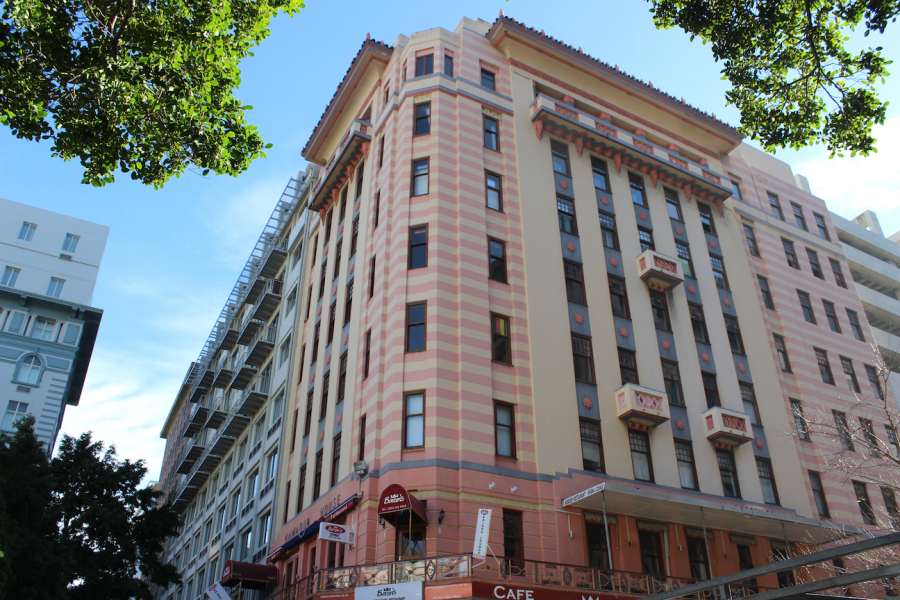
With the recent steep update of residential units in the Cape Town CBD, the question now is how to meet the demand for new units while meeting the pockets of the new urban dwellers.
During the mid-2000s, the Cape Town Central City (the city’s traditional CBD) experienced the same residential property boom felt across the country. Between 2003 to 2008, around 3 500 residential units were brought onto the market place, the result both of conversions of underutilised office blocks into residential as well as new builds. Selling largely off plan, sales were brisk, often to investors who leveraged the opportunity to buy more than one unit.
Then, as it did across the globe, the bubble burst. A significant number of units were put back on the market, or simply remained unoccupied. While many potential residents dreamed of the true 24/7 lifestyle vibrant international cities enjoyed, at street level this simply did not yet exist in the Cape Town CBD. Thanks to the work of entities such as the Cape Town Central City Improvement District (CCID), which has been in operation since 2000, and its partners at the City of Cape Town and the SAPS, the CBD was by this time indeed a cleaner, safer environment in which to be during office hours, but there was as yet very little life beyond the nine-to-five of the working week.
Says Rob Kane, chairperson of the CCID: “What happened in the late 2000s with the burst of the property bubble was not a phenomenon by any means unique to the CBD, but it certainly took our residential development as a live, work, play environment back a few paces. For many years, there was a substantial oversupply of units available for sale, and an overall dampening down of achievable prices.
“Once retailers closed their doors at 17h00, or at 13h00 on a Saturday, there was very little afterhours activity in the CBD, apart from the clubs and bars catering to a younger market. Many people had not yet realised that the Cape Town Central City had turned around from the crime and grime it had experienced in the late 1990s.”
Then came the 2010 FIFA World Cup™, which bought scores of Capetonians back into the CBD. “Many of them returned for the first time in decades – and they discovered a very different CBD to the one they had experienced in the past, including wonderful upgrades to public spaces and a new safe, reliable public transport system in MyCiTi,” says Kane.
As a result, the past three years in particular have seen the CBD residential market turn around, and along with it ever-increasing opportunities to service both the new residential community “after hours” and to attract a broader audience into the CBD.
The residential property market is among those sectors tracked closely by the CCID in its annual investment publication, The State of Cape Town Central Report. The latest edition, 2014 – A year in review, has just been published and notes that year-on-year sales of residential property have risen from R115 million in 2011 to R296m in 2014, with well-priced apartments now selling often within weeks, if not days, of being listed, and the average cost per unit sold creeping upwards month to month.
Says Kane: “The 2014 report noted that the average sales price of a residential unit stood at R1.55m (up from R1.48m in 2013) or an average sales price of R19 227.85/m2. In just the first quarter of 2015, this has already risen, among the 50 properties sold during this period, to an average sales price of R 1.923m per unit (or R22 824/m2).”
The newfound popularity of the Cape Town CBD is not unique in the global scheme of things: a recent report published by the UK Government’s Foresight Future of Cities Project, The Business of Cities (authors Emily Moir and Greg Clarke), notes that the latest cycle of globalisation is seeing an increasing international trend for residents and businesses to return to traditional downtowns.
With this, says the UK report, comes densification along with increasing numbers of educational institutions and the redevelopment of older, underutilised locations.
To quote the report, “The importance of short travel times between work and childcare is encouraging inner-city living. Individual preferences have changed from favouring working environments in attractive ‘green’ areas to those in amenity hubs, where restaurants, bars, coffee shops and public transport links are all within easy reach. The net effect is that companies see re-urbanisation as the key to recruitment of employees who are clustered in city centres.”
Kane has no doubt that the next wave of development in the Cape Town CBD will be residential, in line both with the current demand for stock in the Central City as well as the need to densify cities towards a long-term sustainable existence. Since the late 2000s, very few new units have come onto the marketplace.
The question, however, is how to keep the costs of units at a level where those who desire to live downtown can afford them. Kane notes: “We’ve seen a huge shift since 2011 and right now the demand has outstripped the supply. However, residential real estate agents operational in the CBD and their clients are particularly crying out for units under R1 million, and when these come onto the market they are snapped up overnight.
“This is largely indicative of a ‘new wave’ of long-term investor confidence that has returned to the market, and many of these units are either rented out to young professionals who may not yet be in a position to buy or, of course, the ever-expanding student market. Not only is our downtown a popular residential option for students attending colleges and universities in other parts of the city (such as the University of Cape Town in Rondebosch), the CBD itself now has 45 educational institutes, with close to 13 000 students and over 1 600 staff members.”
A factor of some concern, notes Kane, is the way in which certain media releases have exaggerated the value of property in the CBD itself. “The Cape Town Central City is a very defined area of 1.62km2, and does not include neighbouring suburbs such as De Waterkant or the V&A Waterfront, where property prices are already much higher. What tends to happen is that the average of properties being sold in these areas is added to the average of prices sold in the CBD, and the boundaries become blurred. Suddenly the ‘value’ of CBD properties is touted on average to be closer to the R3m or even R4m mark, where actually right now we’re sitting at the R1.924m average sales price per unit, as noted earlier.”
Of the 50 properties sold during the first quarter of 2015, eight were still under the R1m mark and came in at an average of R17 596.59/m2. With the average size being 44m2 and the average price of R774 250 (highest R960 000 and lowest R620 000), this is starting to coincide with another and equally important global trend that is emerging: the sacrifice of space in favour of location.
Dave Russell, a director of property consultancy firm Baker Street Properties, agrees. Citing a recent article that appeared on BBC.com (“Live small, be happy. The next big thing”, 21 April 2015), he confirms: “The international trend is towards smaller residential units in downtown areas, because location has become paramount. Even families with children are giving up their large homes in the suburbs and opting instead for small-scale urban living that brings them closer to amenities as well as their place of work.”
A new development in the Cape Town CBD is that previously large units (there are still a few of well over 100m2) are now being bought and redeveloped into smaller units. To accommodate this demand, Russell believes the CBD will now once again see conversions of old and underutilised office blocks to residential. However, with at least one year to 18 months’ minimum required to bring units to the market, those coming on board in future are unlikely to be sold for under R20 000/m2.
“The rate per m2 may well start to climb towards R35 000/m² in order to reconfigure existing office space into residential,” says Russell. “And the average size of the unit will be between 40 and 50m2.
Notes Kane: “You may still be able to buy for R1m, but you’ll need to understand that the size of what you’ll be buying will be closer to 32m2.”
In terms of filling the gap for student accommodation, Russell has been receiving numerous enquiries. “A lot of potential investors are asking me: ‘Where are the opportunities for me to develop student accommodation?’”
Such opportunities could certainly exist for developers in terms of utilising the Urban Development Zone (UDZ) South African Revenue tax incentive that allows a tax deduction based on a special depreciation allowance on investments made either in upgrading existing properties or building new ones in the CBD area (which falls within an UDZ zone).
For example, the incentive offers investors who refurbish an existing building (such as a C-grade, underutilised office block) the opportunity to deduct 20% of the refurbishment and upgrade costs over five years once the building is in use, enabling the owner to write off these costs over a five-year period. Only the initial purchase price of the property does not qualify for the UDZ incentive.
Says Kane: “This could be particularly attractive to someone who is considering building rental units for the residential market – particularly in terms of supplying student accommodation.”